FOG Reduction Enzymes for Grease Traps, Lift Stations, and DAF Pretreatment
Industrial wastewater teams do not need another vague “drain cleaner.” They need dependable bulk enzyme blends that help keep fats, oils, and grease moving through real pretreatment systems.
Our FOG reduction enzyme blends are built for industrial wastewater treatment plants, food and beverage facilities, commercial pretreatment operators, and maintenance teams dealing with grease traps, lift stations, wet wells, collection lines, and DAF loading.
Use them to support cleaner conveyance, reduce grease mat accumulation, improve housekeeping around odor-prone assets, and help stabilize pretreatment performance before issues become emergency callouts.
Need pricing for your site? Request a quote using the on-site form.
Built for industrial FOG problems, not household drains
FOG behaves differently in an industrial system. It cools, congeals, floats, sticks to pipe walls, binds with solids, traps odor, and can create thick mats in grease traps, lift stations, wet wells, and equalization tanks.
A properly selected enzyme blend can help break down complex organic soils into more manageable components, supporting downstream biological treatment and reducing the maintenance burden associated with grease accumulation.
Common wastewater challenges we help address
- Grease mats in traps, wet wells, and lift stations
- Line fouling and slow flow in FOG-heavy collection points
- Odor associated with stagnant organic buildup
- High solids and grease load entering DAF pretreatment
- Excessive pump-outs, jetting, and manual cleanouts
- Variable loading from production schedules or washdown cycles
- Pretreatment systems stressed by food residues, oils, and emulsified organics
Where these enzyme blends are used
Our FOG-focused enzyme programs are commonly evaluated for industrial and commercial pretreatment areas where grease control directly affects uptime, maintenance planning, and discharge consistency.
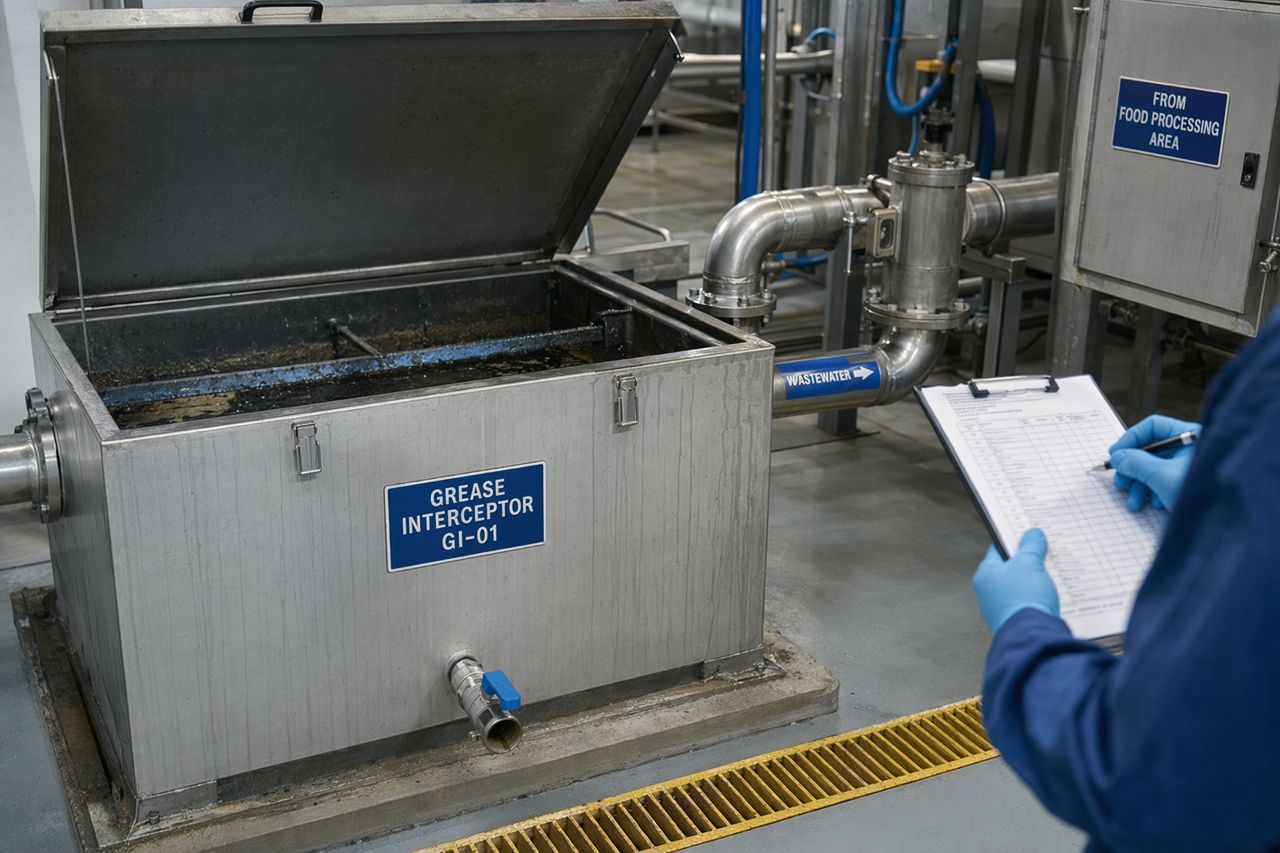
Grease traps and interceptors
Support ongoing breakdown of accumulated grease and food-based organic soils between scheduled service intervals. Enzyme treatment can help reduce hard-to-remove buildup and improve the condition of trap contents before pump-out.
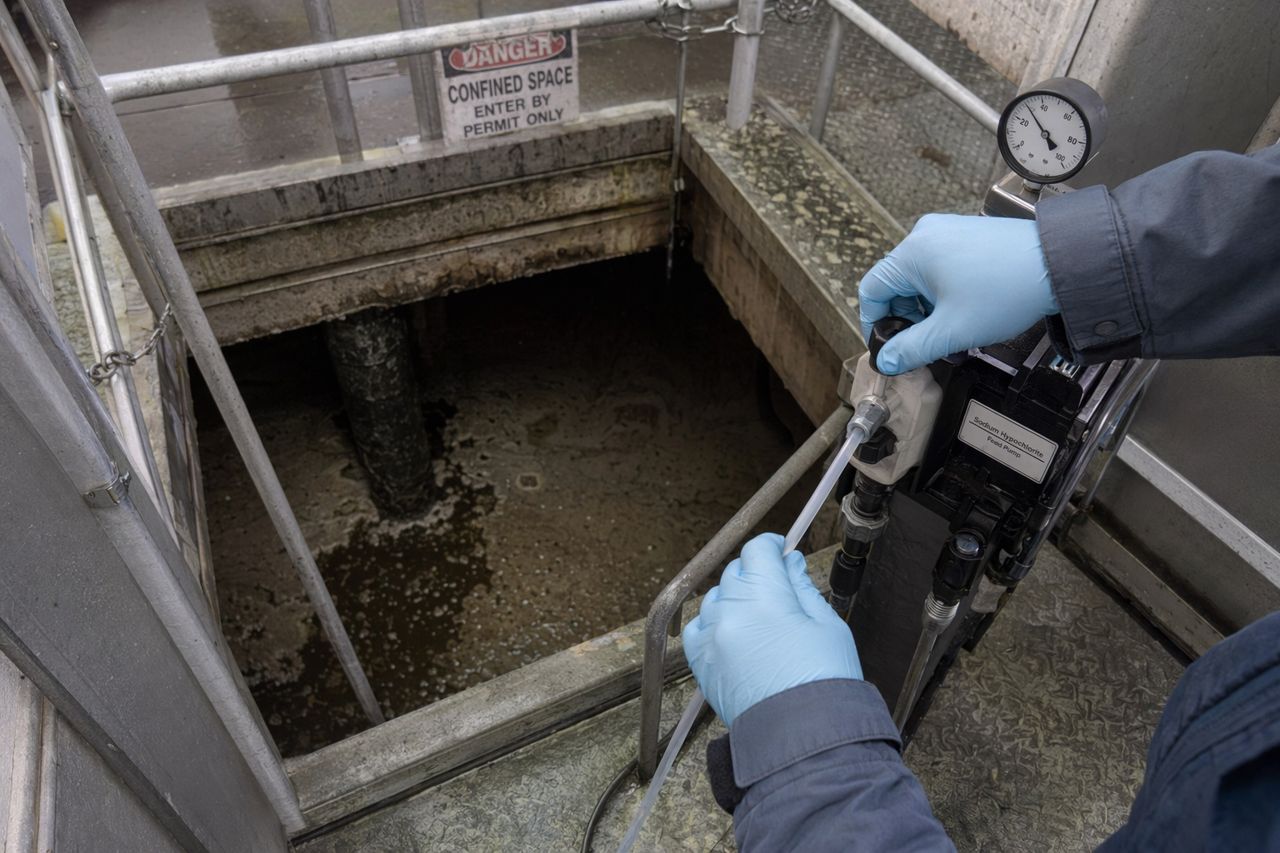
Lift stations and wet wells
Help manage floating grease layers, sidewall buildup, and odor-generating organic accumulation in low-flow or intermittent-flow areas. This can support safer, cleaner maintenance access and fewer nuisance conditions around critical pumping assets.
Collection lines and transfer piping
FOG-heavy wastewater can create deposits that narrow lines and increase cleaning frequency. Enzyme blends can be applied as part of a preventive maintenance strategy for areas with recurring grease-related fouling.
DAF pretreatment support
FOG reduction upstream of dissolved air flotation can help plants manage influent variability, reduce heavy organic loading events, and support more consistent separation performance. Enzymes are not a replacement for proper chemical treatment or equipment control, but they can be a useful part of a broader pretreatment program.
Practical value for plant managers and pretreatment teams
The value of an enzyme program is not just what happens in a jar test. It is whether the operation becomes easier to manage.
Potential operational benefits include:
- Reduced grease mat formation in targeted assets
- Cleaner wet wells, traps, and transfer areas over time
- Lower frequency of emergency grease-related maintenance events
- Less reliance on reactive jetting and manual removal
- Improved odor control support where organic buildup is the source
- More stable pretreatment conditions ahead of DAF or biological treatment
- Bulk supply options that fit industrial dosing routines
Bulk enzyme blends for industrial wastewater treatment
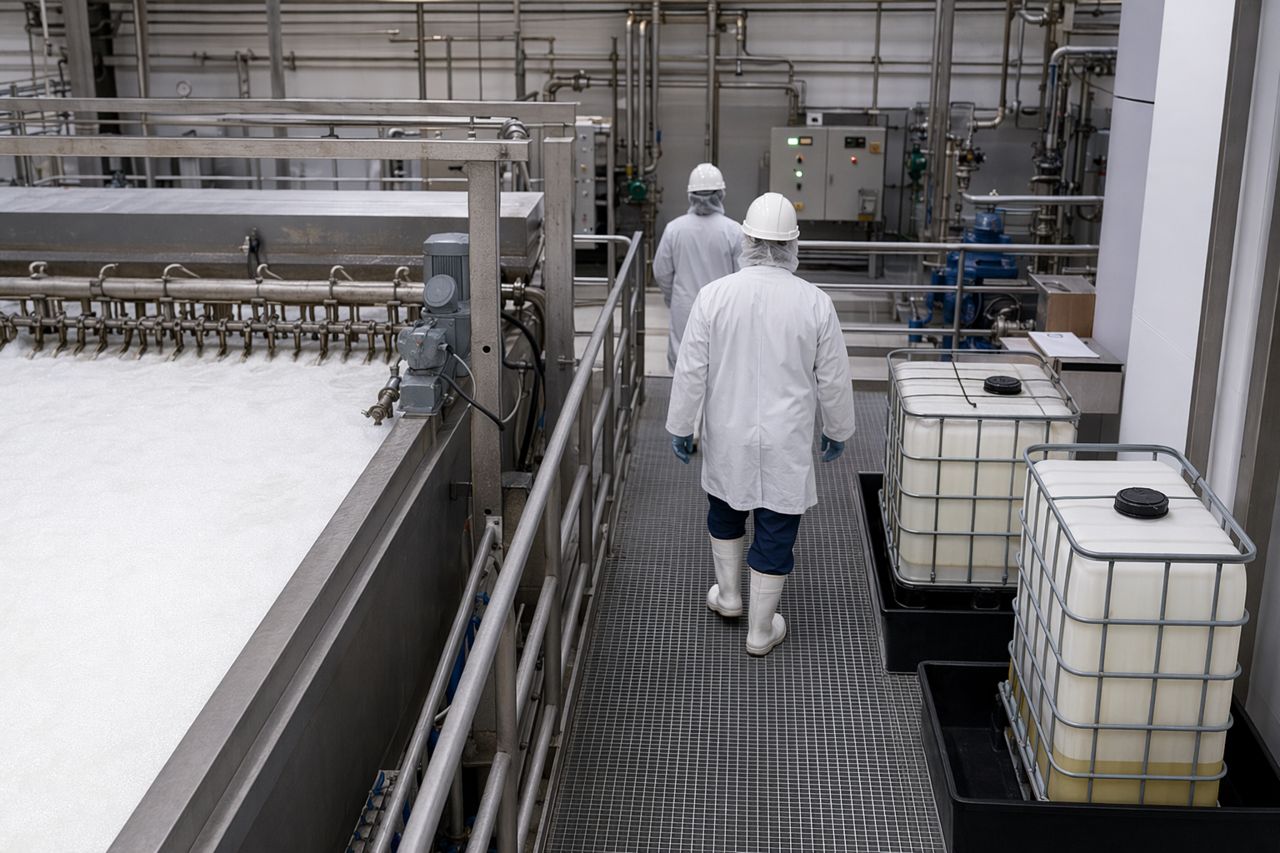
Our enzyme blends are selected for industrial FOG conditions, including food processing residues, animal fats, vegetable oils, dairy soils, starches, proteins, and mixed organic wastewater streams.
Depending on your site, a blend may include enzyme types selected to support the breakdown of fats, proteins, and carbohydrate-based residues often found together in industrial wastewater. The goal is practical performance across the actual waste profile, not a one-dimensional product matched to one isolated contaminant.
Suitable facilities may include
- Food and beverage manufacturing plants
- Meat, poultry, and seafood processors
- Dairy and cheese production facilities
- Bakeries and prepared-food manufacturers
- Rendering and edible oil facilities
- Central kitchens and commissaries
- Industrial parks with FOG-heavy tenants
- Municipal pretreatment systems receiving commercial grease load
Program design: matched to your flow, loading, and assets
FOG control depends on more than product selection. Contact time, application point, water temperature, pH range, surfactant exposure, cleaning chemicals, flow patterns, and hydraulic retention all influence results.
When you request a quote, share as much of the following as possible:
- Application area: grease trap, lift station, wet well, line, EQ tank, or DAF feed
- Approximate daily flow or operating schedule
- Type of wastewater and source process
- Known FOG, COD, BOD, TSS, or oil and grease trends if available
- Current maintenance frequency for pump-outs, jetting, or cleanouts
- Odor complaints or nuisance conditions
- Current chemical program, if any
- Preferred format, packaging, and delivery frequency
We will help you identify the right bulk enzyme blend and a practical starting program for your operation.
What enzyme treatment can and cannot do
A credible enzyme program should be positioned correctly.
Enzymes can support the breakdown of organic residues and help reduce buildup when conditions are suitable. They work best as part of a managed maintenance or pretreatment strategy.
Enzymes are not a substitute for properly sized traps, compliant discharge practices, adequate solids screening, DAF operation, or required sludge hauling. Severe blockages, mineral scale, inorganic solids, and mechanical failures may require physical cleaning or equipment service before an enzyme program can maintain improvement.
Why buyers choose a bulk enzyme program
Industrial wastewater operators need supply reliability, straightforward application guidance, and products that fit plant routines.
We support B2B buyers with:
- Bulk-oriented enzyme blend options
- Application guidance for industrial FOG control points
- Quote support based on site conditions and volume needs
- Packaging options suitable for plant handling
- Practical recommendations without unnecessary lab jargon
- Responsive communication for maintenance and pretreatment teams
Request a quote
If FOG is creating grease mats, odor, line fouling, excess pump-outs, or DAF loading issues, we can help you evaluate a bulk enzyme blend for your wastewater system.
Use the on-site request a quote form and include your wastewater source, application point, estimated flow, current maintenance issue, and preferred order volume.
A technical sales specialist will review your details and respond with recommended next steps.