Why DAF Units Get Overloaded in Food Processing Plants
Dissolved air flotation systems are often blamed when effluent quality drifts, sludge blankets thicken, or operators start chasing chemical settings. In many food processing plants, the DAF is not the root cause. It is the first visible place where upstream variation becomes expensive.
For plants handling meat, dairy, bakery, ready meals, beverages, edible oils, sauces, or snack production, wastewater strength can change sharply across the day. Fats, oils, grease, proteins, starches, suspended solids, sanitation chemicals, and cleaning cycles do not arrive as a neat average. They arrive as peaks.
That is why DAF overload is usually a system problem: production scheduling, drain management, equalization, pH control, polymer and coagulant balance, solids screening, sludge removal, and maintenance all interact.
For industrial wastewater teams evaluating bulk enzyme blends for industrial wastewater treatment, the practical question is not whether enzymes can replace a DAF. They cannot. The better question is whether upstream organic load conditioning can help reduce the severity of peaks that make the DAF harder to control.
What DAF Overloading Looks Like on the Plant Floor
A DAF unit under stress usually shows several warning signs at once:
- Rising FOG or TSS in the DAF effluent
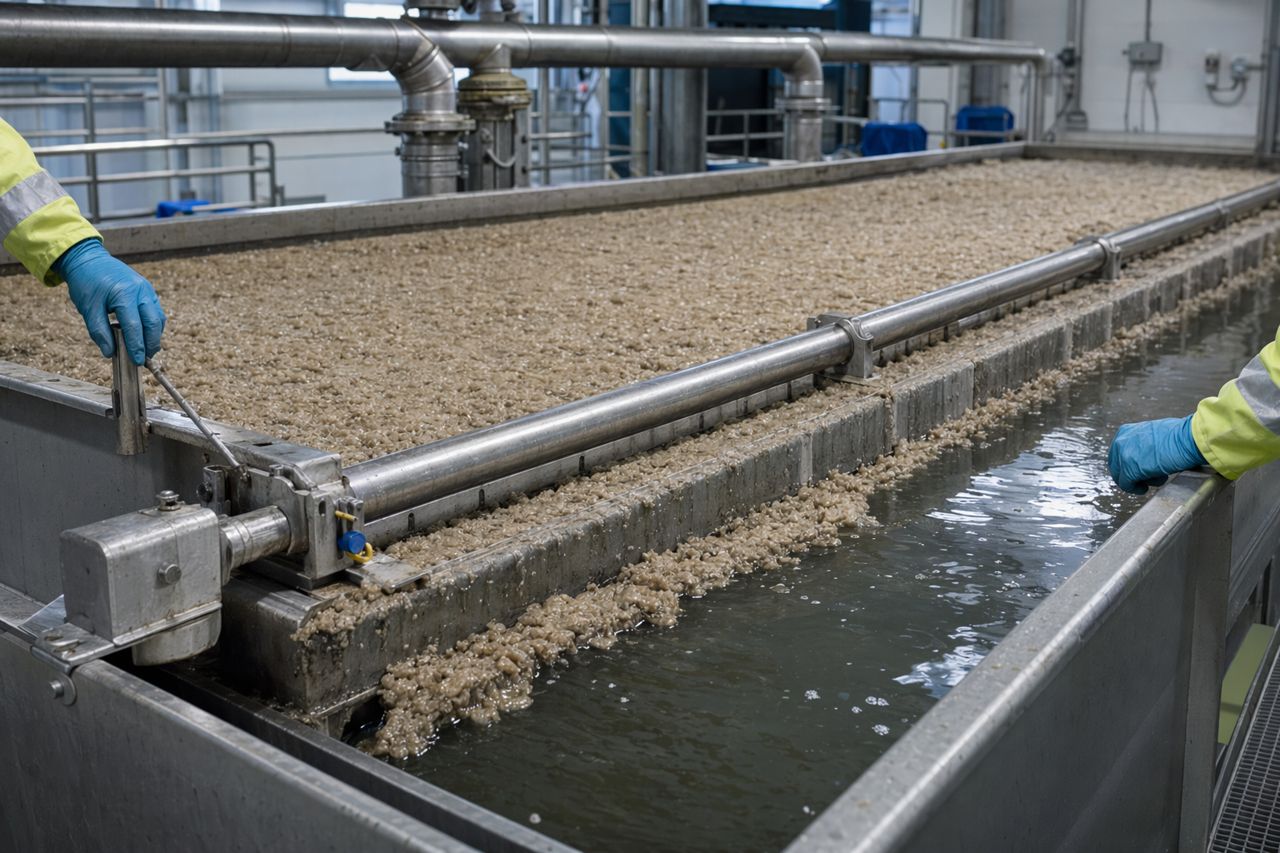
- Thick, unstable float that collapses or carries over
- Excessive sludge volume and frequent skimmer adjustment
- Higher coagulant or polymer demand without consistent improvement
- Air saturation performance that seems acceptable, but separation still fails
- Odors or biological stress downstream
- Operators making repeated chemical changes during shift changes
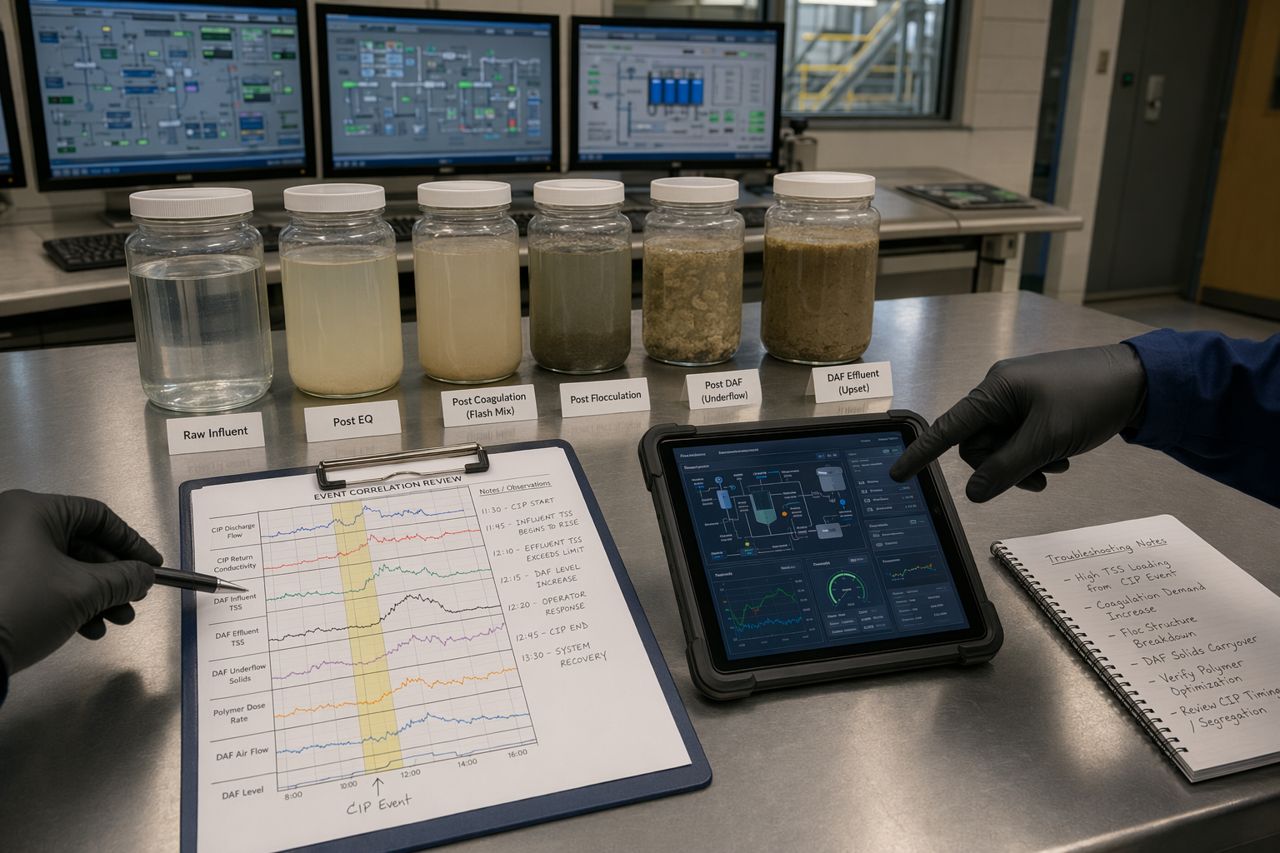
- Poor recovery after sanitation or CIP events
These symptoms can look like a DAF design issue. Sometimes they are. But in many plants, the DAF is receiving loads outside the range it was tuned to handle.
1. Upstream FOG Peaks Arrive Faster Than the DAF Can Recover
Food plants rarely discharge fats, oils, and grease at a steady rate. FOG peaks often happen during:
- Fryer boil-outs and oil handling
- Meat trimming and rendering-related washdown
- Dairy separator losses or product changeovers
- Sauce, dressing, and emulsion cleanup
- Warm water washdown that mobilizes grease deposits in drains
- End-of-shift sanitation when production residues are flushed at once
When a high FOG slug reaches the DAF, it can consume chemical capacity, disrupt floc formation, increase float volume, and push partially separated material into the effluent trough.
The issue is not only the total daily FOG load. It is the short-duration concentration spike. A DAF sized around daily averages may struggle when several hours of load arrive in minutes.
Practical checks
- Review production and sanitation timing against DAF upset logs.
- Check whether grease trap or sump cleaning events correlate with DAF instability.
- Identify drains that release warm, high-strength FOG during washdown.
- Confirm equalization tank mixing is preventing grease rafting and sudden release.
2. CIP Discharge Timing Can Create Chemical and Organic Shock
Clean-in-place systems protect hygiene and production uptime, but their wastewater profile can be difficult for treatment operations. A single CIP sequence may include alkaline wash, acid rinse, detergents, sanitizers, surfactants, chelants, and high-temperature discharge.
When CIP waste is released as a concentrated slug, the DAF may see:
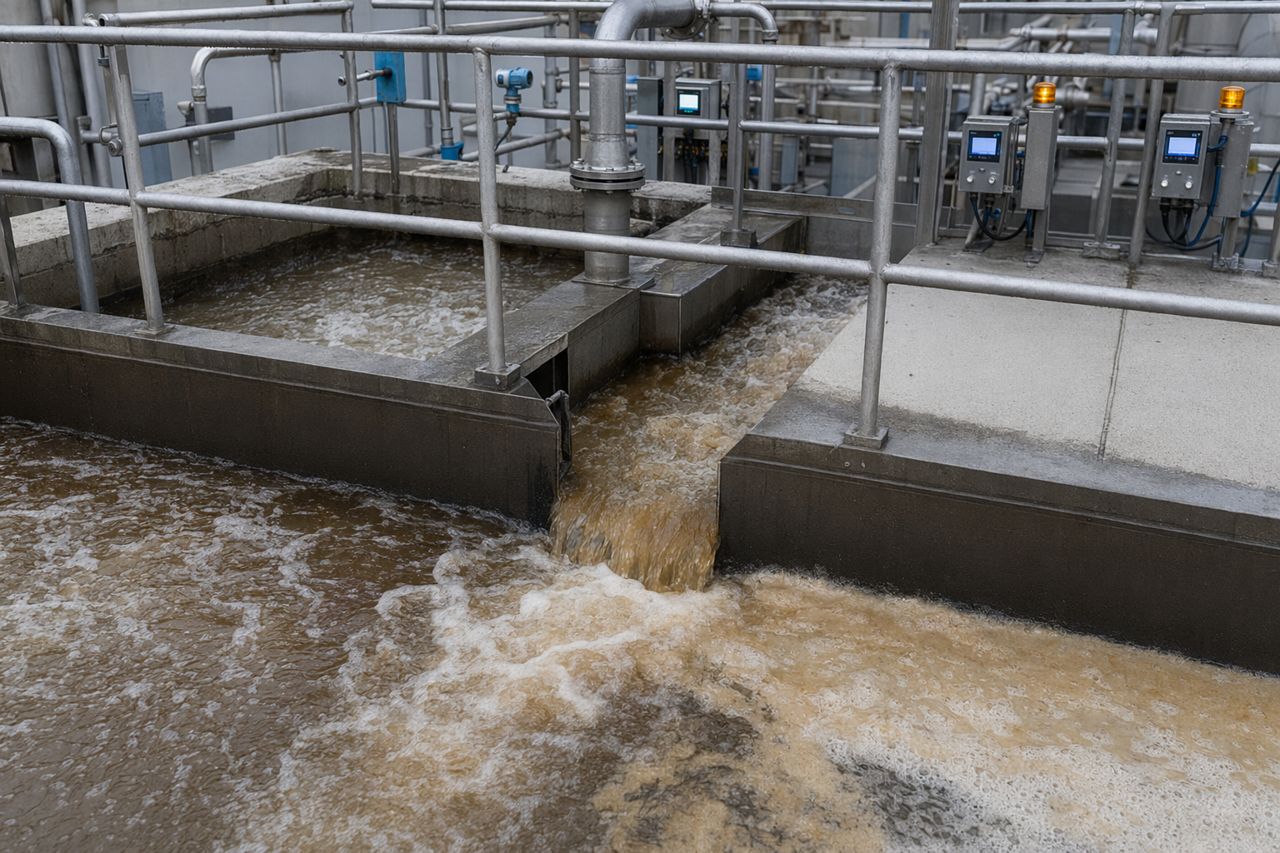
- Rapid pH movement
- High dissolved and emulsified organics
- Surfactants that stabilize emulsions and reduce flotation efficiency
- Temperature changes that alter grease behavior
- Cleaning chemicals that interfere with coagulation
Even a well-operated DAF can be pushed outside its control range if CIP timing is not managed.
Practical checks
- Map CIP discharge windows by line, room, and product type.
- Segregate the most disruptive CIP streams where feasible.
- Use equalization to blend CIP discharge before chemical treatment.
- Avoid stacking multiple CIP releases into the same short treatment window.
3. pH Swings Reduce Coagulant Performance
DAF chemistry depends on a workable pH range. Coagulants, polymers, emulsified fats, proteins, and starches all respond differently when pH shifts. If the influent pH swings too quickly, operators may see the floc change from firm and floatable to weak, pin-like, or sticky.
Food processing plants often experience pH movement from:
- Caustic CIP
- Acid rinse steps
- Fermentation or dairy losses
- Pickling, brining, or sauce production
- Chemical over-correction in neutralization systems
A common trap is treating the DAF like the problem and increasing chemical dose. If pH is outside the practical window, more chemistry may simply create more sludge without improving separation.
Practical checks
- Trend pH continuously before the DAF, not only downstream.
- Confirm neutralization control response is not overshooting.
- Check probe condition, calibration records, and installation location.
- Review whether pH control is reacting to slugs too late.
4. Solids Carryover Can Overwhelm Flotation
DAF systems are not designed to be the only line of defense for large solids. When screens, strainers, rotary drums, or settlement areas are bypassed, blinded, or undersized, the DAF may receive heavy solids that interfere with floc formation and float handling.
Typical food plant solids include:
- Meat particles and fine protein solids
- Fruit and vegetable fragments
- Flour, dough, and starch residues
- Cheese fines and dairy curd
- Spent grains or fibrous material
- Packaging fragments and label debris
High solids loading can increase sludge volume, reduce effective hydraulic capacity, and create maintenance issues at pumps, valves, and skimmers.
Practical checks
- Inspect upstream screens during peak production, not only during clean conditions.
- Review bypass practices during sanitation or maintenance.
- Check whether solids are being macerated into smaller, harder-to-remove particles.
- Compare sludge volume trends against production recipes and raw material changes.
5. Coagulant and Polymer Balance May Be Chasing a Moving Target
Chemical programs work best when influent quality is relatively stable. In overloaded food wastewater systems, operators may change coagulant, polymer, pH setpoint, recycle rate, and skimmer speed in response to symptoms that are actually caused upstream.
Over-adjustment can create its own problems:
- Excessive sludge generation
- Fragile floc that shears under mixing
- Sticky float that blinds surfaces
- Polymer carryover downstream
- Higher chemical spend without stable compliance
The goal is not simply to use more chemistry. The goal is to reduce variability enough that chemistry can be optimized and held steady.
Practical checks
- Separate true chemical underdose from upstream load shock.
- Keep change logs for dose adjustments and compare them to influent events.
- Avoid making multiple control changes at once without tracking results.
- Confirm mixing energy is adequate but not destroying floc.
6. Maintenance Bottlenecks Reduce Real DAF Capacity
A DAF may be rated for a certain flow and loading, but real capacity depends on maintenance condition. Small mechanical issues become major performance limits when the influent is already difficult.
Common bottlenecks include:
- Fouled air release points
- Worn or poorly aligned skimmers
- Sludge pumps that cannot keep up during peak float production
- Uneven flow distribution
- Saturator or recycle pump issues
- Accumulated deposits in pipes, sumps, and equalization tanks
- Instrumentation drift that hides the real operating condition
When maintenance is delayed, the DAF has less resilience. The same FOG or solids peak that was manageable last quarter may now cause carryover.
Practical checks
- Inspect air dispersion quality across the unit.
- Verify sludge removal capacity during peak float periods.
- Clean and inspect equalization tanks, sumps, and transfer lines for grease deposits.
- Review preventive maintenance frequency against actual load severity.
Where Enzyme Blends Fit in the Discussion
Bulk enzyme blends for industrial wastewater treatment are best considered as part of an upstream load-management strategy, not as a magic fix for an overloaded DAF.
In food processing wastewater programs, enzyme blends may be evaluated for targeted support in areas such as:
- Helping condition organic residues before they reach critical separation points
- Supporting FOG and protein breakdown in controlled upstream zones
- Reducing the impact of recurring organic deposits in drains, sumps, and balance tanks
- Improving day-to-day consistency when paired with equalization and good operating control
- Supporting downstream biological treatment by reducing avoidable shock loading
The value is operational stability. When wastewater character becomes more predictable, DAF chemistry is easier to tune, operators make fewer emergency adjustments, and downstream processes have a better chance of staying inside their intended operating window.
What to Review Before Specifying an Enzyme Blend
Before selecting an enzyme program, a plant should define the problem clearly. Useful information includes:
- Wastewater source points and discharge timing
- Production schedule and sanitation schedule
- FOG, COD, BOD, TSS, pH, and temperature trends where available
- DAF influent and effluent patterns
- Equalization tank design, mixing, and retention behavior
- Current chemical treatment approach
- Known bottlenecks in screens, pumps, sludge handling, and maintenance
- Any downstream biological treatment constraints
A well-scoped enzyme blend should be matched to the waste profile, contact opportunity, operating conditions, and commercial objective. For most B2B buyers, that objective is not a laboratory claim. It is lower disruption, better compliance confidence, reduced emergency intervention, and a more controllable treatment train.
A Practical DAF Overload Troubleshooting Sequence
Use this sequence before assuming the DAF needs replacement:
- Correlate upset timing. Match DAF failures to production, CIP, washdown, and maintenance events.
- Check equalization behavior. Look for grease rafting, dead zones, poor mixing, or slug release.
- Verify pH control. Confirm the DAF is receiving water within the intended treatment range.
- Inspect solids protection. Confirm screens and strainers are not bypassed or overloaded.
- Review chemistry methodically. Avoid multiple simultaneous changes that obscure the cause.
- Inspect mechanical capacity. Validate air release, skimming, sludge pumping, and flow distribution.
- Evaluate upstream conditioning. Consider whether targeted enzyme treatment can reduce recurring organic stress before it reaches the DAF.
Key Takeaway
DAF overloading in food processing plants is usually caused by variability: FOG peaks, CIP discharge timing, pH swings, solids carryover, chemical imbalance, and maintenance constraints. The DAF becomes the visible pressure point, but the solution often starts upstream.
For plants sourcing bulk enzyme blends for industrial wastewater treatment, the strongest business case is built around stability: fewer shock events, more predictable separation, better operator control, and a treatment process that is easier to manage.
Request a Quote
Planning an enzyme program for a food processing wastewater system? Share your wastewater profile, target pain points, and operating constraints with our technical team.
Request a quote through the on-site form and we will help identify a bulk enzyme blend approach suited to your treatment train.